

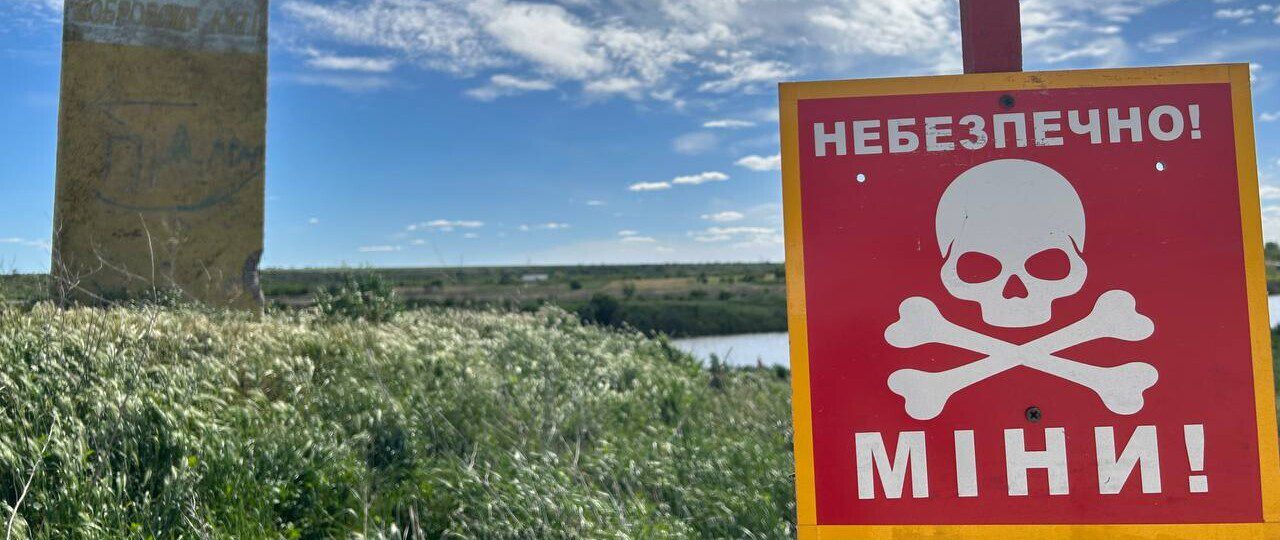


To mark Poland’s official withdrawal from the Ottawa Convention or the Anti-Personnel Mine Ban Treaty, Julia Głębocka, Human rights researcher for Amnesty International Poland, reflects on what the return of these indiscriminate weapons means for human rights in Europe.
Not so long ago, in 2020, the European Union was funding mine relief efforts in Lebanon and hoping to see an anti-personnel mine-free world within five years. HALO Ukraine, an EU-supported organization, had already been making tangible change, removing explosives from Ukrainian soil since 2016. In Chad, the EU-funded project PRODECO, was reintegrating anti-personnel mine victims into society through long-term medical care and rehabilitation, as well as supporting demining efforts.
At the beginning of 2025, all 27 EU member states had been parties to the Ottawa Convention, which bans the use, production, stockpiling and transfer of anti-personnel mines, for over two decades.
But any hope for a more peaceful world was short lived.
While many of us dreamed that one day these indiscriminate weapons would be eradicated, these ghosts of twentieth century warfare are making a comeback.
In March 2025, the governments of Estonia, Latvia, Lithuania and Poland announced their intention to withdraw jointly from the Ottawa Convention. Finland followed suit with a similar announcement in April 2025. While the withdrawal has already come into effect for other countries, Poland’s exit entered into force on Friday. The move from multiple EU member states marks a disturbing shift in national security policies undermining the bloc’s credibility on its own adherence to international humanitarian law.
For decades, Brussels has been an avid supporter of the Ottawa Convention. EU strategies on conventional weapons explicitly condemn anti-personnel mines as indiscriminate tools that cause harm far beyond the battlefield. EU funds are routinely channeled into demining operations, victim assistance programmes and international advocacy against anti-personnel mines. And yet, when several of its own members openly abandon this consensus, the EU refused even to utter words of condemnation.
Meanwhile, in my home country, Poland, arms companies wasted no time in seizing on the opportunity that the Ottawa withdrawal presented.
Almost immediately after Poland announced its withdrawal, two major arms-industry companies signaled their readiness to restart anti-personnel mine production. State-owned Bydgoszcz Electromechanical Plant Belma and Niewiadów Polish Military Group JSC declared that they could produce enough mines to secure the entire 800-kilometre eastern border of Poland, with plans to sell any surplus to the Baltic states and Ukraine.
The Polish government justifies its decision in the language of military deterrence. But according to international monitoring organisations, roughly 80 to 85 percent of anti-personnel mine victims worldwide are civilians, many of them children. In Ukraine, where anti-personnel mines have been deployed on a massive scale, their effects extend far beyond military targets. It is worth mentioning that severe mine contamination affected local communities not only in terms of physical safety, but also economically. Ukrainian farmers had to take the initiative and start demining operations themselves and were then reimbursed by their government. Anti-personnel mines do not end wars. They survive them.
Absent, however, from public debate is how the use of these mines might put refugees and migrants at risk.
Julia Głębocka
In 2021-2022 Amnesty International documented Poland’s unlawful pushbacks and ill-treatment of refugees and migrants at its border with Belarus, the adoption of legislation limiting access to the border for humanitarian organizations, and the granting of powers to the Polish Border Guard to reject asylum applications without examination, in breach of international law standards.
On the other side of the border, Amnesty International revealed how Belarusian authorities ruthlessly forced people under duress across the border, in full knowledge of the violence they would face at the hands of Polish border guards on the other side. seeking protection in Europe.
Since then, restrictions to accessing the border were once again re-introduced through the creation of a “buffer/exclusion zone” in June 2024, the effects of which were repeatedly extended and remain active to date. Soon after, the law regulating the use of arms by the Border Guard was amended, limiting their accountability for excessive force.
In a flagrant violation of international law, in March 2025 (at the same time Poland announced its withdrawal from Ottawa) the right to seek asylum at the border was temporarily suspended. Humanitarian organizations warned at the outset that these measures were a slippery slope.
Amnesty International has serious concerns about how a possible re-introduction of anti-personnel mines compounds risks for refugees and migrants, creating a new horrifying and dangerous reality for people seeking protection in Europe.
These developments along Europe’s northeastern borders are retrograde moves that will only further weaken the global consensus aimed at minimizing civilian harm during armed conflict. Antipersonnel mines’ devasting impact on civilians, sometimes decades after they are deployed, and unexploded anti-personnel landmines can blight whole regions for generations.
The decision to leave the Convention must be reversed.
Europe once committed itself to leave anti-personnel mines in the past. Allowing them to return uncontested means accepting that some ghosts are welcome after all.
This article was originally published in EUobserver.