



Dear High Representative/Vice-President Kallas,
We are writing to express Amnesty International’s serious concern about the Chinese authorities’ recent use of vaguely defined “national security” grounds to impose de facto exit bans on human rights defenders (HRDs) accused or convicted of such crimes and their family members. We urge the European Union (EU) and its member states to take stronger, coordinated and public action to challenge this practice and to call on the Chinese authorities to ensure that those affected can enjoy freedom of movement, including to depart China, without retaliation.
We are also particularly concerned that these cases arise against the backdrop of a broader expansion and formalization of travel restrictions in China. On 31 July 2026, the Chinese government adopted the Regulation on Exit and Entry Administration, which will enter into force on 15 September 2026. Among other provisions, this new regulation authorizes restrictions on international travel based on broadly defined notions of “national security” and “national interests”, permits restrictions linked to conduct alleged to have taken place outside China, and allows authorities in certain cases not to inform affected individuals of the reasons for travel restrictions. These developments risk further institutionalizing the use of exit bans against HRDs and their family members and embedding them more deeply within China’s broader national security framework.
Recent cases
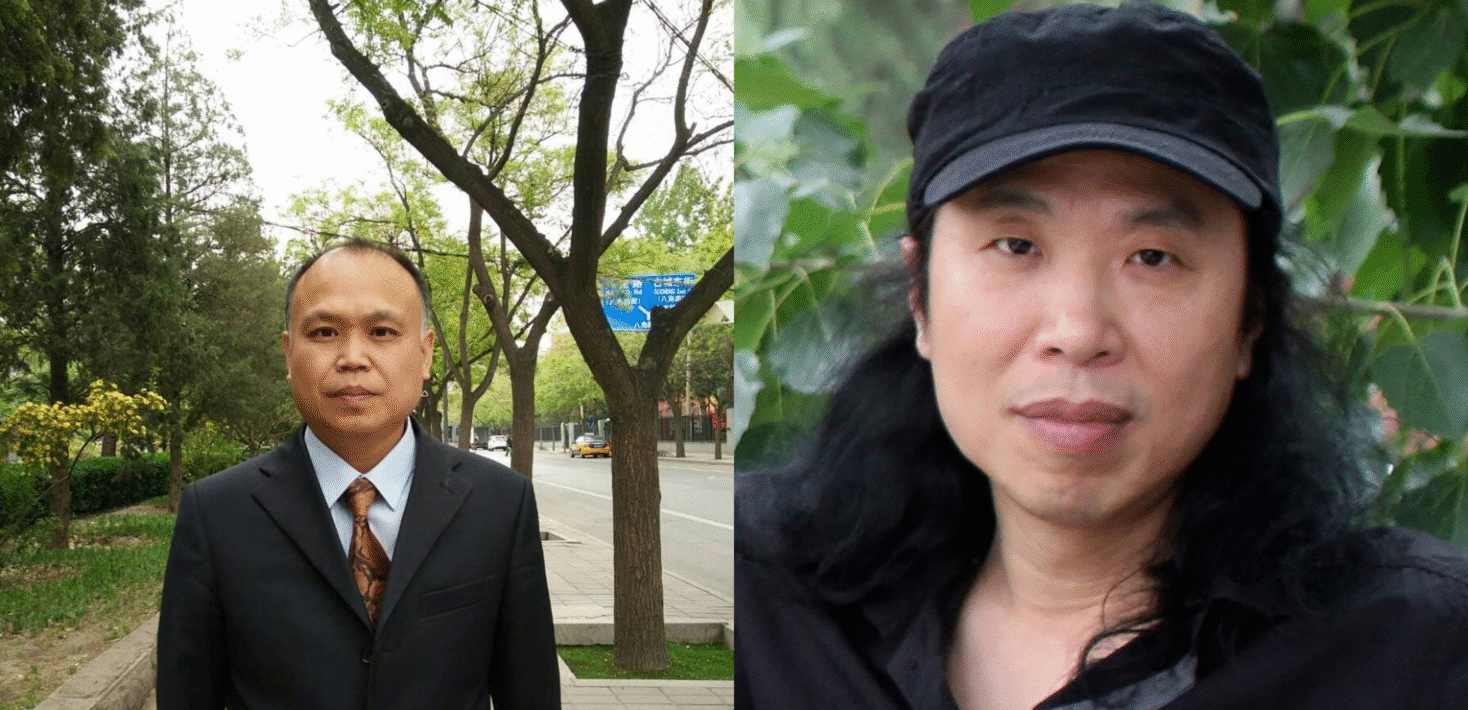
The case of prominent human rights lawyer Yu Wensheng illustrates this disturbing practice. In April 2023, Yu and his wife Xu Yan were detained while travelling to meet representatives of the EU Delegation in Beijing and were later sentenced to three years and twenty-one months of prison, respectively, on groundless charges of “inciting subversion of state power.” Both also received so-called supplemental sentences of “deprivation of political rights” following their release; Xu Yan’s supplemental sentence expired in April 2026.
Following his release from prison in April 2026, Yu and his family reportedly remain subject to ongoing restrictions and surveillance, a concern expressed in an EU public statement. In June 2026, Yu, his wife Xu Yan and their son were prevented from leaving China on the grounds that they allegedly pose a threat to national security.
In a similar development, renowned artist and United States of America permanent resident Gao Zhen was detained in August 2024 and later charged with the offence of “slandering China’s heroes and martyrs”, apparently in connection with artistic works created years earlier. Although his trial was held in March 2026, Gao is still awaiting his verdict and sentence.
Since his detention, Gao’s wife – a Chinese citizen – has reported that she is subject to a de facto exit ban on alleged national security grounds. As a result, their seven-year-old son – who is a foreign national – has also been unable to leave China and return to his normal place of residence and education. As of August 2026, both remain in Beijing.
A broader pattern of repression
The cases of Yu Wensheng and Gao Zhen are not isolated incidents. They reflect a wider, well-documented pattern of the Chinese authorities using exit bans and other movement restrictions against HRDs and their family members[1], often on vaguely defined national security grounds, and without sufficient transparency or meaningful opportunities for those affected to challenge the restrictions and obtain an effective remedy. In many instances, individuals continue to face restrictions long after completing prison sentences.
Amnesty International has documented how formerly detained HRDs are regularly subjected to ongoing restrictions through the imposition of “deprivation of political rights”, a supplementary punishment often attached to national security convictions. In practice, these measures can be used to justify continued surveillance, harassment and restrictions on freedom of movement and other rights long after an individual has completed their sentence.
Amnesty International has repeatedly raised concerns that partners and children are subjected to punitive measures solely because of their relationship to a targeted HRD. In addition to the cases raised here, this also includes the lawyers targeted in the “709” crackdown, and Hong Kong activists and their families. The United Nations (UN) Secretary-General and UN experts[2], separately, have raised similar concerns about exit/travel bans on Chinese HRDs.
Superficial steps forward undermined by new regulations
On 11 June 2026, the Peoples’ Republic of China (PRC) State Council Information Office published China’s National Human Rights Action Plan, 2026-2030, in which it madea series of pledges to improve human rights in the country. Under the section “Personal and Personality Rights”, the Plan commits the Chinese state to “prevent and rectify” unlawful restrictions on the movement of family members and other close relatives of individuals involved in crimes as part of implementing the principle of individual criminal responsibility. While this is prima facie a welcome commitment, making progress will require addressing the ongoing documented use of arbitrary restrictions against family members with little or no reasonable legal grounds.
Such progress, however, is sorely lacking. Recent legislative and regulatory developments, notably the newly adopted Regulation on Exit and Entry Administration, have done the opposite and suggest that such restrictions are becoming increasingly institutionalized within China’s broader national security framework, rather than remaining exceptional measures applied in individual cases. As part of a broader system of control, surveillance, intimidation and reprisals directed at HRDs and their families, such measures risk further shrinking civic space, restricting engagement by civil society with international institutions and obstructing the ability of HRDs to safely carry out their important work.
A call to action
The use of exit bans and other travel restrictions against HRDs raises serious human rights concerns, particularly where such measures are imposed arbitrarily, disproportionately or on over-broad and vaguely defined national security grounds. The imposition of similar restrictions on family members because of their association with a targeted individual may constitute a form of reprisal or intimidation and can have a chilling effect on the exercise of human rights.
The EU has consistently affirmed its commitment to supporting HRDs around the world, including in China. Yet many Chinese HRDs continue to face restrictions, intimidation and retaliation even after their release, while their family members are subjected to reprisals and coercive measures because of their association with them. These practices demonstrate that repression does not end when a prison sentence ends. In this context, focusing solely on detention and imprisonment is no longer sufficient; the EU should also address the growing use of exit bans and other measures that restrict the human rights of HRDs and their families.
The EU should also recognize that exit bans in China are no longer merely isolated administrative measures affecting a small number of individuals. Increasingly, they form part of a broader national security framework that allows authorities to maintain control over HRDs during criminal proceedings or long after their release and to extend pressure onto their families. The growing institutionalization of these practices warrants a sustained and strategic response.
In light of these concerns and in line with the EU’s condemnation of harassment, intimidation and reprisals against civil society in China and abroad, we urge you to take a principled and robust stand against these practices and to make clear to the Chinese authorities that released HRDs and their families must be allowed to fully enjoy their human rights, including the right to leave and return to their own country, free from political or judicial interference:
- Systematically, consistently and publicly raise concerns about use of exit bans, other restrictions on freedom of movement, and reprisals against Chinese and Hong Kong HRDs and their family members in all exchanges with Chinese officials up to highest level, including at EU-China human rights dialogues, political consultations, summit meetings and other high-level engagements, as well as at multilateral fora, including the UN Human Rights Council.
- Publicly call on the Chinese and, as relevant, Hong Kong authorities to
- Immediately lift the exit bans imposed on Yu Wensheng, Gao Zhen and their families, ensuring that they can travel freely, access needed medical care, maintain family contacts and participate in international exchanges.
- End the use of vaguely formulated national security justifications to impose arbitrary exit bans on HRDs and their relatives.
- Ensure that any restrictions on freedom of movement comply with international human rights standards, are subject to meaningful judicial review, and are not used as a tool of reprisal, post-release control, collective punishment or retaliation against individuals engaging with diplomats, international organizations or UN human rights mechanisms.
- Closely monitor the implementation of China’s Regulation on Exit and Entry Administration and raise concerns in public and private diplomacy whenever its broadly defined national security provisions are used to impose arbitrary travel restrictions on human rights defenders, lawyers, journalists, past and present prisoners of conscience or their family members.
- Maintain regular contact with affected HRDs and their families, monitor developments after their release from detention and seek access to relevant judicial proceedings.
- Explore how the EU and its member states can support practical protection measures for affected individuals and family members, including emergency visas, temporary relocation opportunities, medical pathways, academic fellowships and referrals to relevant international protection mechanisms.
- Raise concerns regarding exit bans and other restrictive measures against human rights defenders and the imposition of reprisals against their family members through relevant multilateral mechanisms, including the UN Human Rights Council – notably through explicit reference in the EU’s Item 4 statement, as well as in the UN General Assembly Third Committee – and through engagement with relevant UN Special Procedures. Particular attention should be paid to cases where such measures appear to constitute reprisals for engagement with UN human rights mechanisms and institutions.
- Coordinate with like-minded governments to raise concerns jointly and consistently regarding exit bans and other reprisals targeting human rights defenders and their relatives.
Yours sincerely,
Sarah Brooks, Deputy Regional Director (China/East Asia)
East and Southeast Asia and Pacific Regional Office
Amnesty International
Eve Geddie, Director
European Institutions Office
Amnesty International
[1] Safeguard Defenders, Trapped: China’s Expanding Use of Exit Bans (1 May 2023); Chinese Human Rights Defenders (CHRD),“If I Disobey, My Family Will Suffer”: Collective Punishment of Human Rights Defenders’ Families in China (15 April 2024). Following his detention during the 709 crackdown, the wife and daughters of human rights lawyer Xie Yang were reportedly prevented from leaving China because of their connection to his case: China: Detained human rights lawyer location unknown: Xie Yang – Amnesty International (12 April 2017).
[2] Communication from the UN Special Rapporteur on the situation of human rights defenders and other Special Procedures concerning Yu Wensheng and Xu Yan (published 5 July 2024); UN Secretary-General, Cooperation with the United Nations, its representatives and mechanisms in the field of human rights (annual reprisals reports), 14 September 2022.