


Ahead of the Foreign Affairs Council on 23 February 2026, Amnesty International, Human Rights Watch and International Federation for Human Rights (FIDH) wrote to High Representative Kaja Kallas and EU Ministers of Foreign Affairs, urging them to act for civilians caught in the conflict in the Democratic Republic of the Congo (DRC).
Dear High Representative Kallas,
Dear EU Foreign Ministers,
A year after the fall of the cities of Goma and Bukavu and as human rights abuses against civilians continue to spiral in eastern Democratic Republic of the Congo (DRC), our organizations call on the European Union (EU) and its member states to act for civilians caught in the conflict in DRC, putting protection of civilians and accountability for violations at the centre of their response. It is urgent that the EU and its member states go beyond mere declarations and their role as donors; they must translate the EU’s commitment to human rights into concrete and sustained actions.
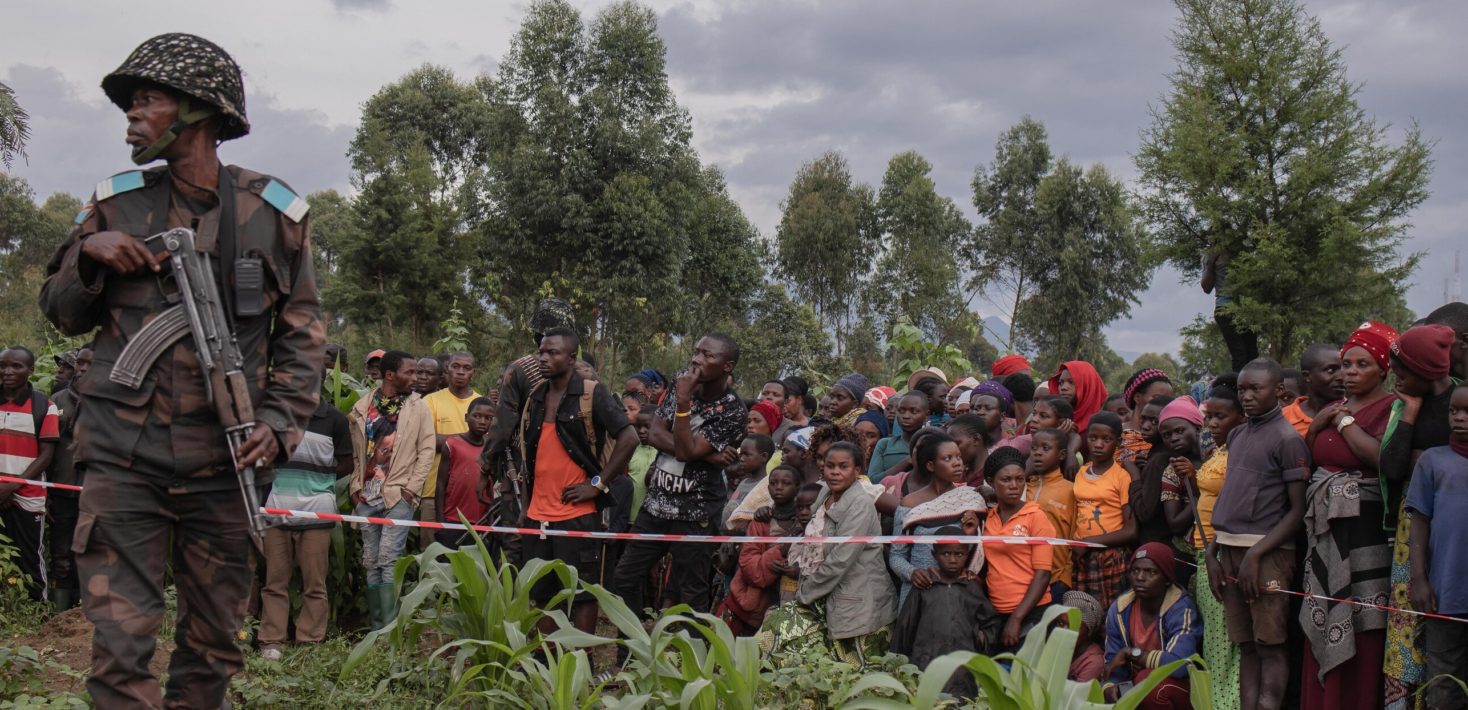
In February 2026, fighting continues between the Rwanda-backed Mouvement du 23 Mars (M23) and the Congolese army and the Wazalendo (a loose coalition of armed groups, some of whom are supported by the Congolese army), across North and South Kivu provinces. The conflict shows no signs of slowing, with devastating consequences for the civilian population, including increasing use of drone attacks. Since M23 entrenched itself in eastern DRC, our organizations have documented how its fighters have summarily killed Congolese civilians, gang-raped women and girls, attacked hospitals, abducted patients and detained, tortured and/or forcibly disappeared civilians, civil society members, human rights defenders and journalists.
In its initial findings delivered on 5 September 2025, the United Nations (UN) Human Rights Council’s fact-finding mission on the DRC reported extrajudicial executions, torture, gang rape and other forms of sexual violence, abductions, forced displacement and recruitment of children, perpetrated by M23 fighters as well as by members of the Congolese army and the Wazalendo, which may constitute war crimes and crimes against humanity.
Across the region, human rights defenders are embattled and targeted, both by Wazalendo fighters and the M23. M23 continues to abduct large numbers of civilians, many of whom are taken to M23-military training centres in Rumangabo and Tchanzou in Rutshuru territory, while the Wazalendo continue to target individuals who are perceived to support M23.
To date, more than 5 million Congolese are internally displaced in the provinces of North Kivu, South Kivu and Ituri. Reception capacities in and around the DRC are under extreme strain, because of overcrowding, inadequate health infrastructure and the lack of humanitarian access and capacity to meet growing needs. Renewed fighting since early December 2025 has forced over 500,000 people to flee, either displaced within the DRC or forced to seek refuge in neighbouring countries. In Burundi alone, around 84,000 new arrivals have brought the total number of Congolese refugees to around 200,000 in a country already facing significant socio-economic challenges.
Serious abuses have continued even during and following US- and Qatar-led efforts to secure a peace deal or ceasefire in the region. Despite the signature of a preliminary agreement between DRC and Rwanda on 27 June 2025, Rwanda-backed M23 forces carried out mass killings, including across Binza groupement, Rutshuru territory, in July and early August 2025. Such atrocities, alongside continuing human rights and humanitarian law violations in the second half of the year, call into question the efficacy of mediation efforts without the political will to implement enforcement mechanisms.
Human rights abuses continued unabated even as EU and African Union (AU) officials jointly committed their “unwavering support for a just, comprehensive, and lasting peace in DRC” at their November summit and the presidents of DRC and Rwanda signed a peace deal in Washington, DC on 4 December. While the 5 December EU statement marking the peace deal rightly expressed regret for violence, human rights violations and the persistent humanitarian crisis in eastern DRC, it lacked concrete commitments and failed to highlight the importance of justice and accountability.
Long-awaited discussions on DRC at the December 2025 and January 2026 Foreign Affairs Council (FAC) meetings have lacked any visible outcome, undermining the credibility of the EU response while reinforcing a sense of impunity among parties to the conflict.
The forthcoming FAC on 23 February 2026 will mark one year since EU Foreign Ministers discussed the “very grave” situation in eastern DRC and committed to several measures, including to review the Memorandum of Understanding on critical raw minerals with Rwanda – a commitment that remains pending to date.
Our organizations call on the EU and its member states to act with an urgency that matches the seriousness of this ongoing conflict, in line with the EU’s stated human rights commitments:
- Urgently engage with both DRC and Rwandan authorities up to highest level, strongly urging all warring parties to prioritize the protection of civilians. The EU and its member states should make clear that they are ready to use all tools at their disposal to hold government officials accountable for human rights violations committed in this context and to put this commitment into action.
- Deliver on a clear, unified EU and member state strategy in response to the DRC crisis in a Team Europe approach, working not only as a donor but acting to ensure concerted public and private diplomacy to save lives and combat impunity. In parallel, the EU and its member states should urgently reassess the implementation of the renewed EU strategy for the Great Lakes region to strengthen critical efforts on human rights and accountability.
- Strongly and publicly condemn the murders, gang rape, forced labour, forced recruitment and other war crimes and crimes against humanity as reported by the Office of the United Nations High Commissioner for Human Rights, as well as sexual violence against women and girls and the recruitment of child soldiers by armed groups. In particular, press Rwanda, which has admitted to “security coordination” with M23, to apply pressure on M23 leaders to reveal the fate and whereabouts of the scores of civilians M23 has forcibly disappeared.
- Spearhead action on justice and accountability for violations of international human rights and humanitarian law in eastern DRC, including pressing all parties to the conflict to allow access to the Commission of Inquiry on the DRC when it begins its work and fully supporting UN mechanisms, especially in the current UN liquidity crisis. This includes taking urgent measures to support the provision of prompt and adequate resources for UN Human Rights Council mandates, including the UN Commission of Inquiry on DRC, to enable it to fulfil their much-needed work.
- Take a stronger role to ensure that accountability and human rights are at the heart of ongoing negotiations. The EU should champion inclusive processes that actively involve human rights defenders and civil society actors with a particular focus on women, youth, and marginalized groups in both negotiation and monitoring processes.
- Deliver on the FAC’s February 2025 commitment to review the EU’s Memorandum of Understanding with Rwanda within the context of the Global Gateway, ensuring the partnership is not contributing to human rights violations and violations of international humanitarian law, including in DRC, and that Rwanda and M23 do not financially benefit from minerals illegally obtained in DRC that fuel their military operations, sustaining the ongoing human rights and humanitarian crisis.
- Continue to provide humanitarian assistance for civilians in M23-controlled areas of DRC as well as to refugees in Burundi. Press M23 to allow international experts to access the airports in Bukavu and Goma to repair damaged infrastructure and allow desperately needed humanitarian aid into eastern DRC. In view of cuts in US foreign aid, increase the humanitarian response in the DRC and in the region for refugees and asylum seekers, matched by robust public and private EU diplomacy in response to the humanitarian and human rights crisis.
- Take action for Congolese human rights defenders in eastern DRC and those displaced by the conflict, providing rapid protection (including visas on humanitarian grounds and relocation), financial support and pro-active diplomacy on their behalf toward regional governments and armed groups.
Amnesty International
Human Rights Watch
International Federation for Human Rights (FIDH)