



Dear Commissioner Brunner,
Dear Ministers of Interior,
Following the recent exchanges in Brussels with the Taliban de facto authorities on the return of Afghan nationals, Amnesty International urges you to immediately reverse course on European Union (EU) institutions and member states’ efforts to deport people to Afghanistan. Afghanistan cannot be considered safe for any forced returns, and any engagement on readmission cooperation with the Taliban de facto authorities is reckless, unconscionable and ignores the EU’s legal obligations under international refugee and human rights law, notably the principle of non-refoulement.
On 23 June 2026, a delegation of Taliban officials arrived in Brussels for meetings with the European Commission and 15 member states, to discuss technical cooperation on return and readmissions to Afghanistan.[1] This meeting followed an invitation issued by the Commission on 12 May, a Commission visit to Kabul in January 2026, as well as earlier pressure by 19 member states and Norway who, in a letter to the Commission in October 2025, urged it to coordinate efforts to accelerate returns to the country. This visit was hailed by Taliban de facto authorities as “historic”, noting that it is the first time ever that the delegation visited the EU and held talks with member states in Brussels.
Amnesty International is deeply alarmed by the EU and member states’ continuing efforts to establish technical cooperation on returns and readmission to Afghanistan – including concrete deportation plans – despite the extensive evidence on the risks that people face upon return, consistently documented by the United Nations (UN), Amnesty International and other human rights organizations in recent years.
Afghanistan is not safe for forced returns. Even before the Taliban de facto authorities took power in August 2021, the country was not a safe destination for returns. Since then, as Amnesty International has documented, the Taliban have effectively dismantled legal frameworks that, at least formally, had previously protected citizens against discrimination and safeguarded fundamental rights, including freedom of expression, freedom of thought, due process, and equality before the law. Instead, the Taliban have introduced decrees, rules, policies, and practices that are inherently discriminatory toward women, girls, and ethno-religious minorities, while also imposing severe restrictions on the rights of the wider population, including personal security, freedom of expression, due process, and equality before the law. Non-compliance is met with flogging, arbitrary arrest, unlawful detention, enforced disappearances, torture, and other abuses. Women and girls have been nearly erased from the public sphere and subjected to ongoing persecution, which may amount to the crime against humanity of gender persecution under international law.
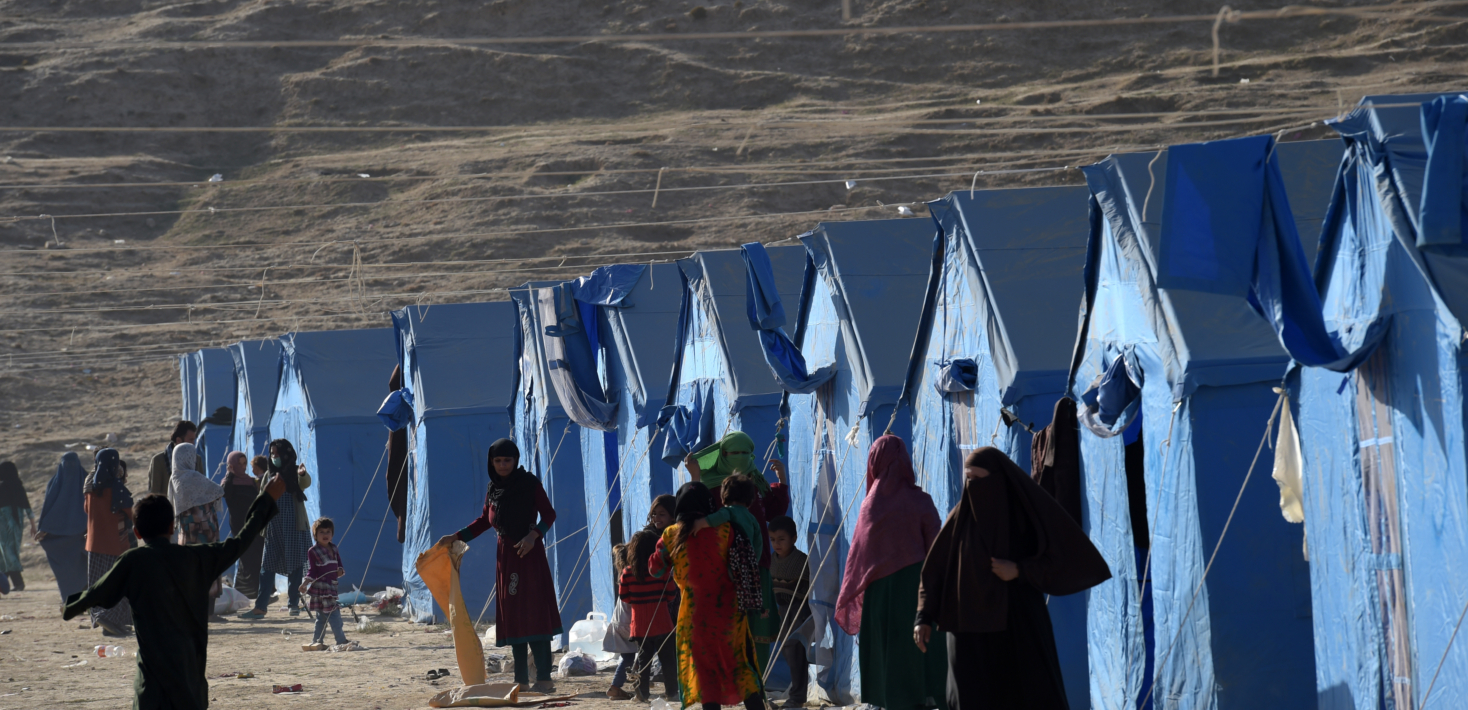
Alongside the ongoing human rights crisis, the country is facing a deepening humanitarian crisis, exacerbated by protracted drought, natural disasters, and cuts and reductions in humanitarian assistance. Afghanistan is the third largest humanitarian crisis globally, with nearly 22 million people in need of assistance. The approximately 5.4 million returnees since October 2023 are facing severe challenges in accessing shelter, livelihoods, healthcare, and other basic services. Cross-border hostilities between the Taliban de facto authorities and the Government of Pakistan continue to harm civilians, damage civilian infrastructure, and drive further displacement. Taken together, the current situation in Afghanistan exposes returnees to serious risk of human rights violations and does not provide a safe, dignified, or sustainable environment for return. The EU and its Member States must therefore halt all forced returns to Afghanistan and ensure that protection decisions reflect the current human rights, security, and humanitarian realities on the ground.
The resumption of forced returns to Afghanistan by EU member states overlooks these real and well-documented risks that returnees face upon return. Renewed efforts to deport people to Afghanistan risk exposing people to irreparable harm and putting their lives in danger, while also placing returning countries in violation of international law. The UN High Commissioner for Human Rights and the UN Special Rapporteur on Afghanistan have recently sounded the alarm over EU states resuming or considering deportations to Afghanistan, as the situation in the country is not conducive to returns.
The European Commission has emphasized that deportations will prioritize those who have committed “serious crimes or pose a security threat”. The protection from refoulement in international law is absolute and applies irrespective of the returnees’ conduct or criminal record. As established by the European Court of Human Rights, “however undesirable or dangerous”, an individual’s conduct “cannot be taken into account” when assessing a risk of refoulement.
Current attempts by the EU and its member states to establish cooperation on readmission for Afghan nationals with criminal convictions or posing a security threat, moreover, risks being a first step towards normalizing further removals to the country of other Afghans with a pending return decision, as Deputy Director General of DG Migration and Home Affairs (DG HOME) in the European Commission has previously indicated. Amnesty International firmly rejects this attempt to avoid the EU’s legal obligations and downplay the scope and impact of potential returns to the country.
Finally, this effort to deport Afghans flies in the face of the EU and member states’ agreed benchmarks for principled engagement with the Taliban de facto authorities. The EU and its member states have repeatedly denounced the Taliban’s abuses, provided significant humanitarian aid in the country, and spearheaded efforts towards accountability, including the establishment of an independent investigative mechanism on Afghanistan at the UN Human Rights Council. The EU cannot credibly condemn serious and ongoing human rights violations in Afghanistan, while simultaneously pursuing cooperation on deportations to the country and endangering the rights and lives of Afghans themselves.
Amnesty International urges you to ensure that the EU and its member states promptly abandon all efforts toward return and readmission cooperation with the Taliban de facto authorities and toward any resumption of deportations to Afghanistan. Any future engagement with the Taliban de facto authorities must remain principled and centred on ending the ongoing, widespread and systemic human rights violations in the country.
Yours sincerely,
Eve Geddie
Director
Amnesty International – European Institutions Office
[1] The delegation reportedly included Austria, Belgium, Bulgaria, Cyprus, the Czech Republic, Denmark, Finland, Greece, Lithuania, the Netherlands, Poland, Slovenia, Sweden, as well as Norway.